How we developed a SaaS platform for petroleum engineers
We created a cloud platform that models acid treatment of oil wells, with a unique interface and high calculation accuracy for the oil industry

We developed an engineering SaaS platform for modeling acid treatment (matrix acidizing) with 80% accuracy and a real effect on oil production and risk reduction.
The task:
To develop a scalable online platform for modeling hydrochloric acid treatment of wells that eliminates errors and increases oil recovery.
The reason:
The customer's MVP application had passed pilot testing successfully, but a reliable, convenient and visually clear service was needed to hand over to clients.
The project began with a request to improve an MVP Windows application developed by the customer for modeling processes in hydrochloric acid treatment (acidizing) of oil wells. The MVP was used for pilot calculations and made it possible to sign the first contracts with oil companies, but it did not provide the ability to scale or to be used in production: the interface was inconvenient, there was no visualization, and distribution among a large number of users was difficult.
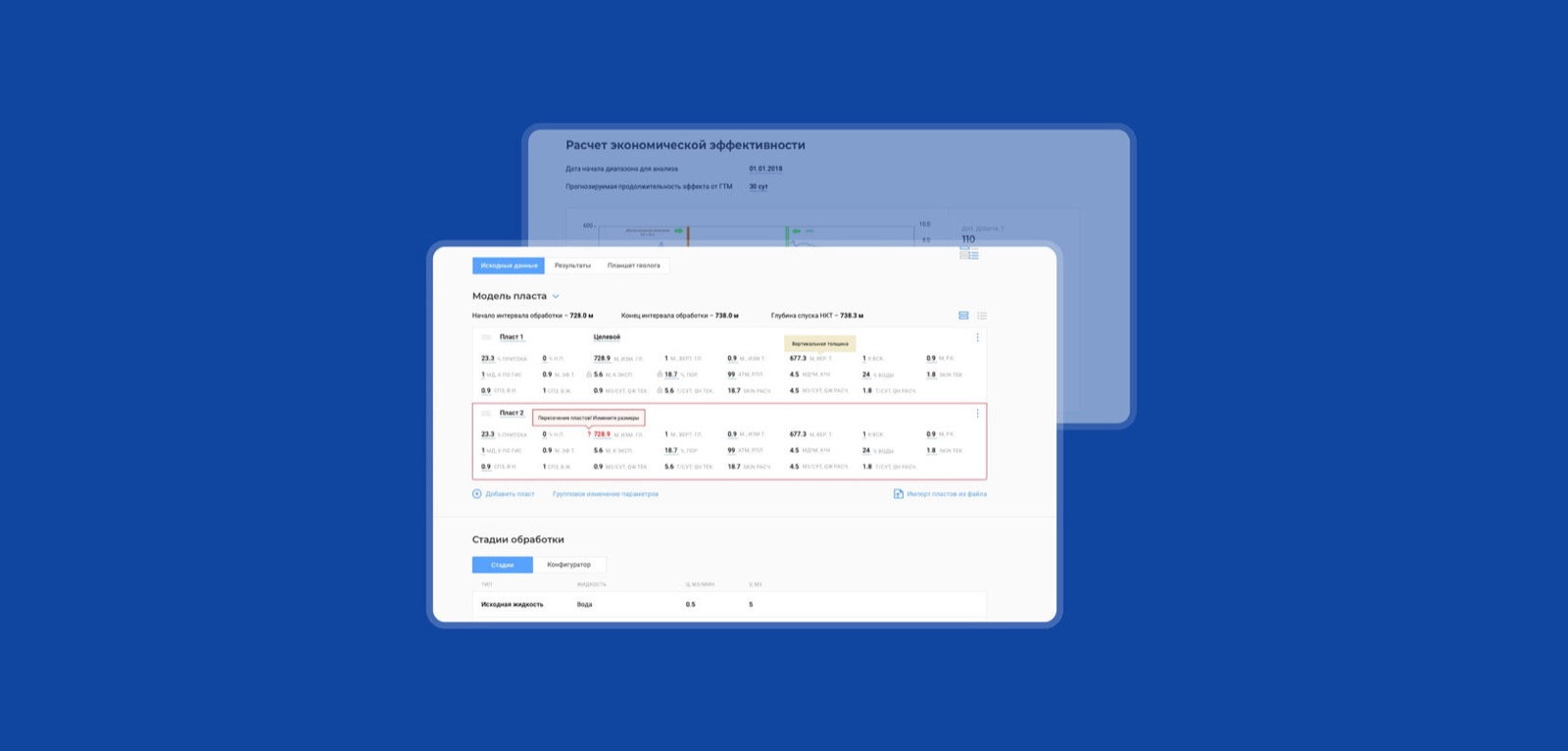
The key task was to move a complex mathematical model, accounting for dozens of parameters of geology, well characteristics, equipment and chemical compositions, into an online service with high performance, stability and ease of use.
To design the solution we studied the subject area in detail: an analysis of well configurations, stages of field development, reservoir properties and the technological features of acidizing. This procedure is used to restore the permeability of formations when production falls, but mistakes in carrying it out can not only cancel the effect but also lead to plugging of the well and a drop in output, which is fraught with significant financial losses.
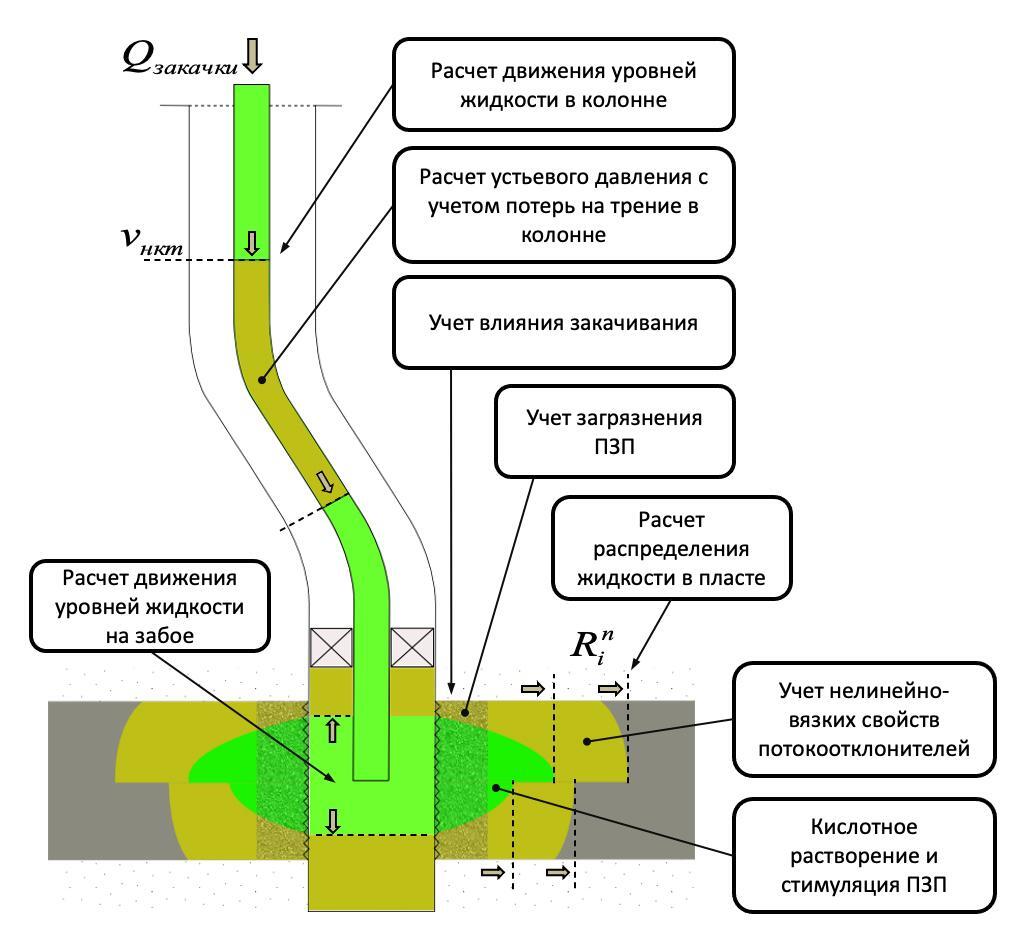
Acidizing involves pumping acids and diverters into the formation in turn in order to raise oil recovery. The calculation algorithm accounts for more than 20 parameters for each of 10–40 layers: porosity, pressure, degree of contamination, water saturation, skin factor, as well as the characteristics of the pumping equipment and chemical reagents. This requires tens of millions of iterations for each well, which was the basis for developing a high-performance SaaS solution.
The Ruby on Rails framework was chosen for the server side, and the mathematical core was implemented in Go, which sped up the calculations. The system processes billions of operations per well while keeping results predictable and reproducible.
The user interface was developed from scratch and adapted to work from any device. It lets users add their own pumps and reagents, work with equipment and chemistry libraries, and compare several treatment scenarios. Input validation, array-processing logic, hints and masks are implemented, which reduces the likelihood of errors in calculations.
The visual part includes 2D charts showing how the permeability of the formation changes as pumping proceeds. This format makes it easier for engineers and decision makers to analyze scenarios for carrying out the work.
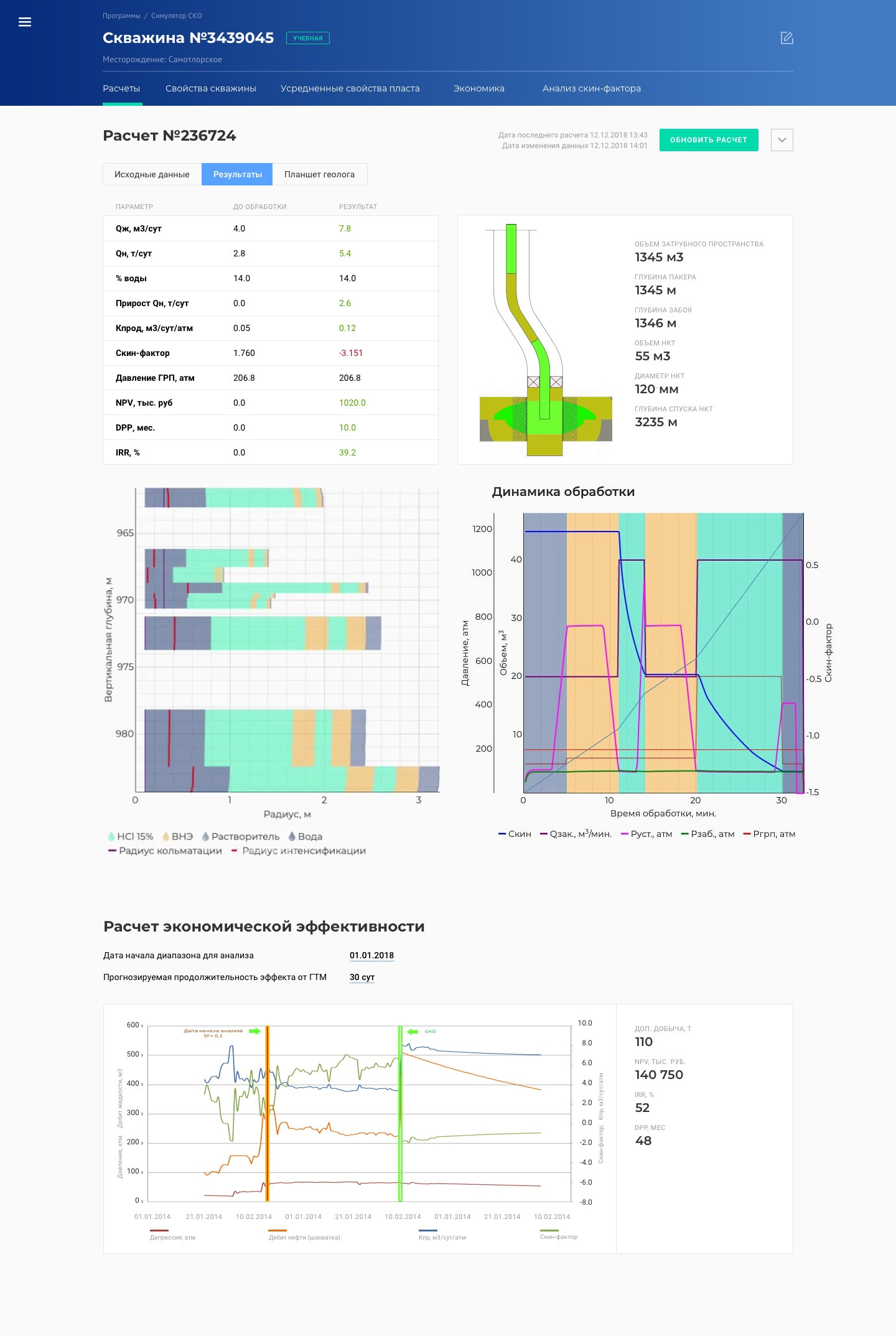
The calculation model is based on Monte Carlo algorithms and the simulated annealing method, which determine optimal pumping parameters while taking technological and operational constraints into account. The results include a forecast of the change in well flow rate and the reduction of skin factor, an assessment of economic efficiency, as well as pressure dynamics, acid penetration depth and the ratio of costs to effect.
The service generates reports that can be used to justify work plans to management or regulators. Access to the system is through authorization, the data are protected, and calculations are saved and can be reproduced.
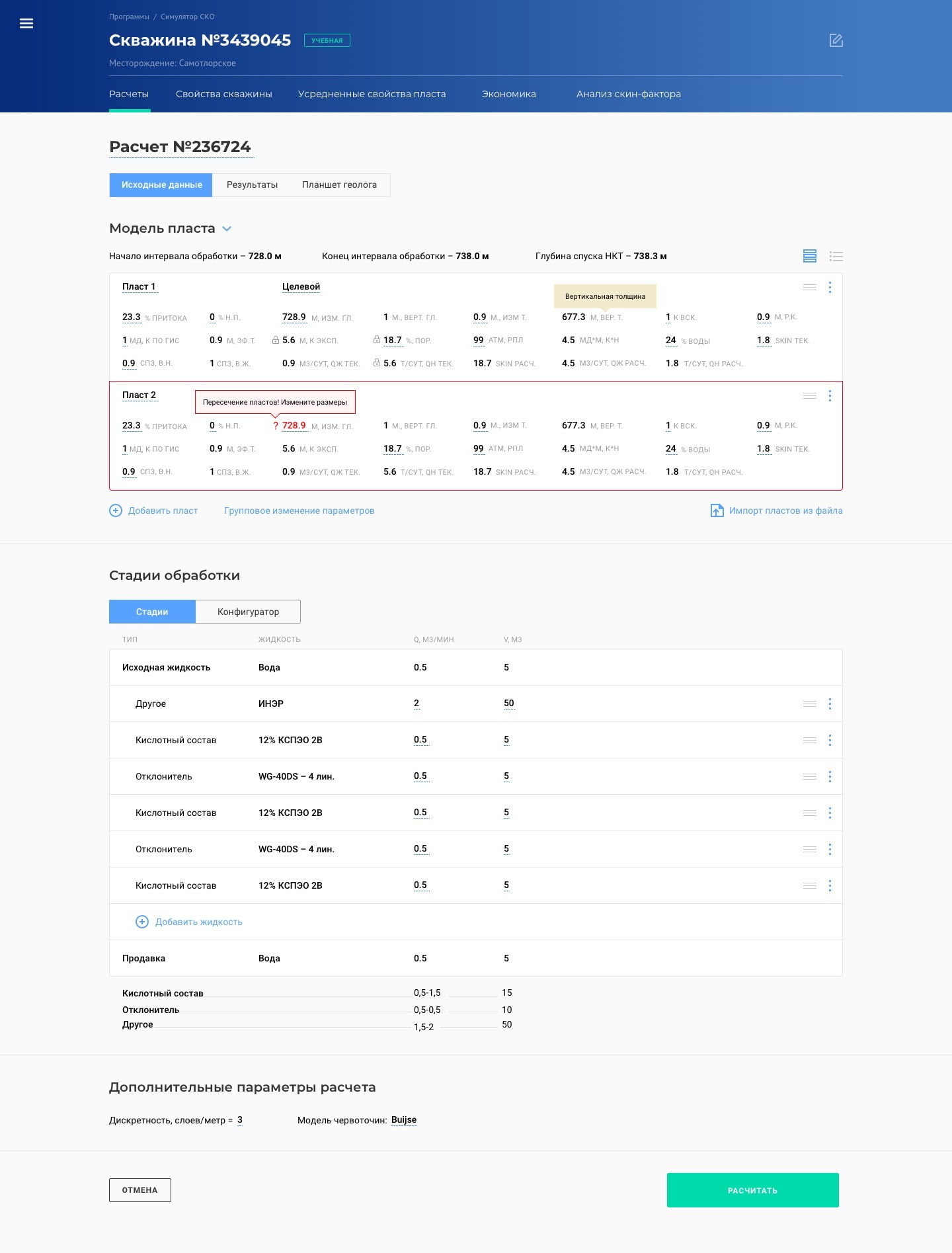
The architecture of the solution is modular, which allows the functionality to be extended. Further development plans additional engineering applications, including:
- a simulator of acid fracturing;
- a simulator of remedial and isolation work;
- a tool for calculating blocking packs and well killing;
- a module for forecasting scale deposits during operation.
Results:
- The platform was moved to a SaaS format with a high level of availability
- Support for custom fluids, equipment and parameters
- Calculations were confirmed with industrial data (80% convergence)
- Used in acid treatment of hundreds of wells of Bashneft and Rosneft (two of Russia's largest oil companies)
- Visualization improved understanding of the processes and reduced risks
- The platform became the core of a marketplace of engineering solutions
- High performance with billions of calculations
- Extensibility to other production scenarios