How Tiqum relaunched Avtotaun's e-commerce and raised conversion by 27%
Tiqum redesigned and re-engineered the Avtotaun service, creating a “smart search” for auto parts and a new customer journey. Conversion grew by 27%

The task
Avtotaun set Tiqum a strategic task: create a modern e-commerce service for finding and buying used auto parts, as the first step toward building a complete digital automotive ecosystem (launch planned for 2026).
The customer journey had to be completely reworked, conversion raised, UX improved, users' trust in the brand increased and the technical limitations of the old site resolved.
The reason
Avtotaun already had a strong offline base:
But the website did not match the scale of the business: search was complicated, product cards were overloaded, the purchase scenarios were confusing, and the support team was under heavy load because of the large number of user questions.
The business needed a new platform capable of handling growing traffic, converting visitors and building trust in the brand.
Avtotaun set Tiqum a strategic task: create a modern e-commerce service for finding and buying used auto parts, as the first step toward building a complete digital automotive ecosystem (launch planned for 2026).
The customer journey had to be completely reworked, conversion raised, UX improved, users' trust in the brand increased and the technical limitations of the old site resolved.
The reason
Avtotaun already had a strong offline base:
- 170,000 items in stock,
- warehouses in 4 cities,
- more than 200,000 customers across Russia and the CIS.
But the website did not match the scale of the business: search was complicated, product cards were overloaded, the purchase scenarios were confusing, and the support team was under heavy load because of the large number of user questions.
The business needed a new platform capable of handling growing traffic, converting visitors and building trust in the brand.
1. A new e-commerce service as the foundation of the future Avtotaun ecosystem
Avtotaun is one of the leaders of the Russian market for used auto parts: tens of thousands of SKUs, a huge range, its own warehouses and quality control of parts. But for today's buyer it is not enough simply to find a part: they want fast, accurate and convenient service.
Avtotaun is one of the leaders of the Russian market for used auto parts: tens of thousands of SKUs, a huge range, its own warehouses and quality control of parts. But for today's buyer it is not enough simply to find a part: they want fast, accurate and convenient service.
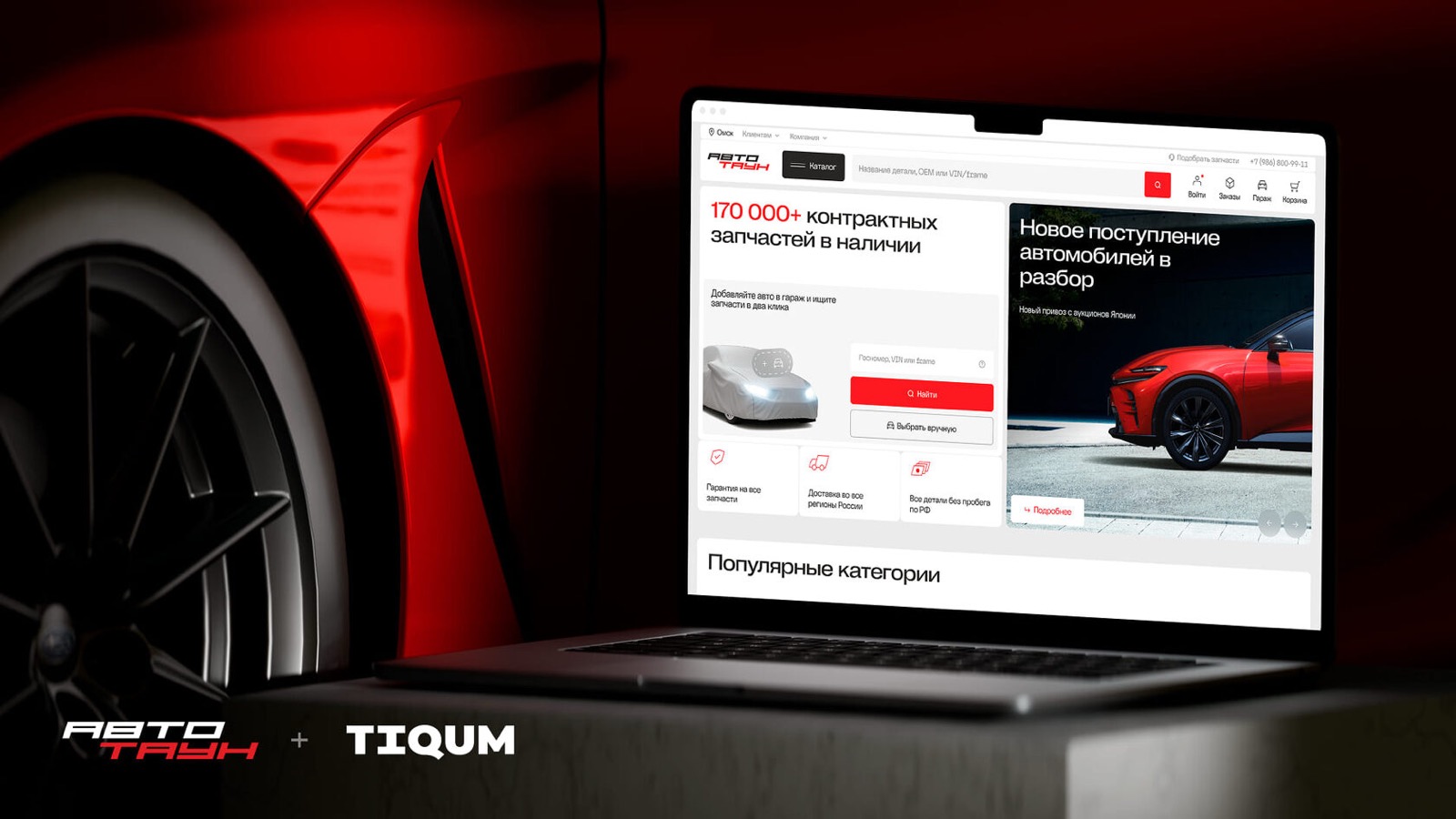
Tiqum had to answer the key question: how do you turn the technically complex process of selecting auto parts into a simple, clear product for every type of user, from professionals to beginners?
Together with the Avtotaun team we began the project with a full audit of the customer journey, UX analytics, heat maps, in-depth interviews and session recordings. We found that:
This data defined the concept of the future service.
Together with the Avtotaun team we began the project with a full audit of the customer journey, UX analytics, heat maps, in-depth interviews and session recordings. We found that:
- 70% of orders are placed from a smartphone;
- 90% of customers start with search;
- users do not understand the difference between VIN, OEM number and the catalog;
- a large share of support requests is caused precisely by confusion over the search scenarios.
This data defined the concept of the future service.
2. “Smart search”: four scenarios combined into one
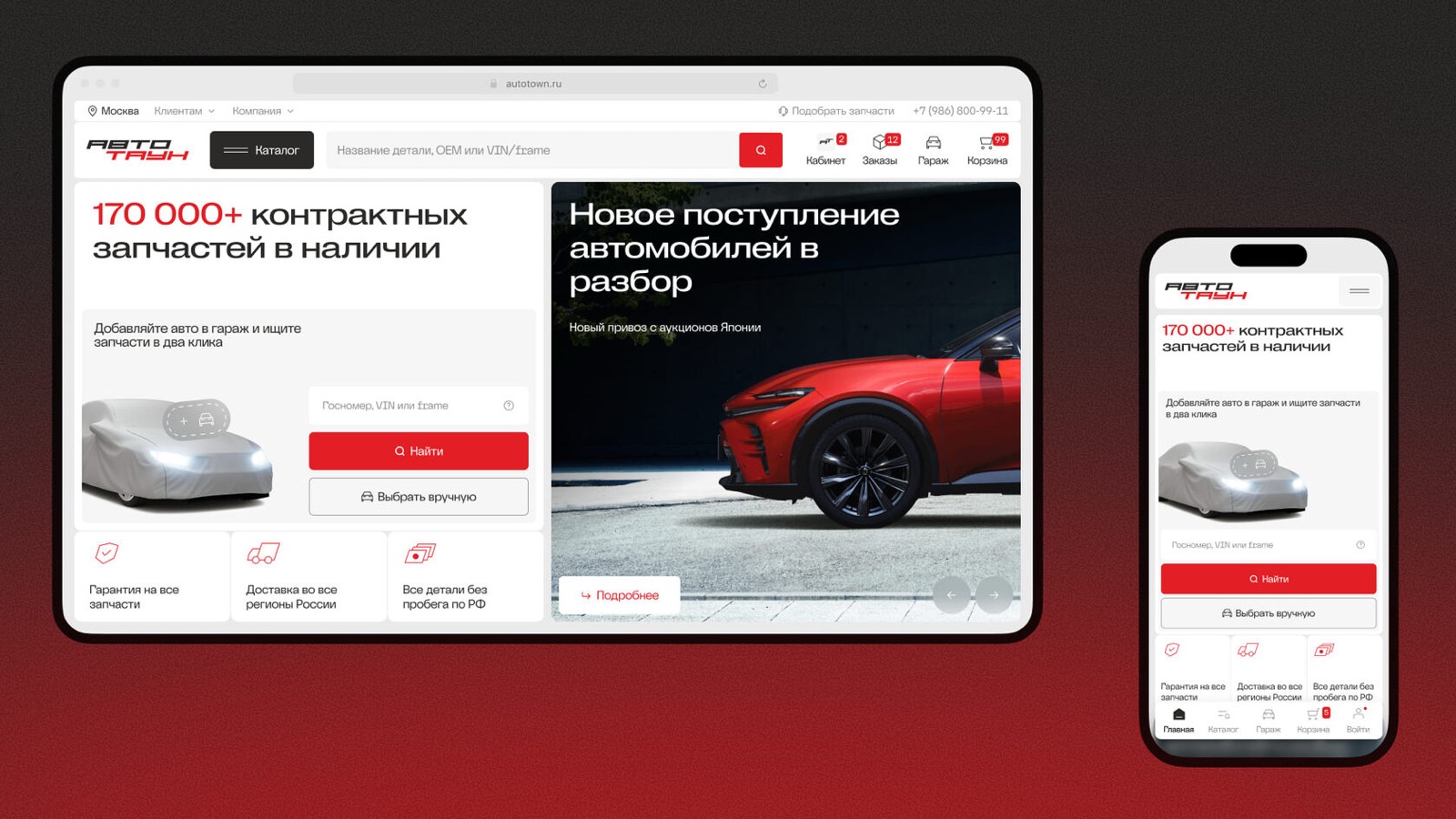
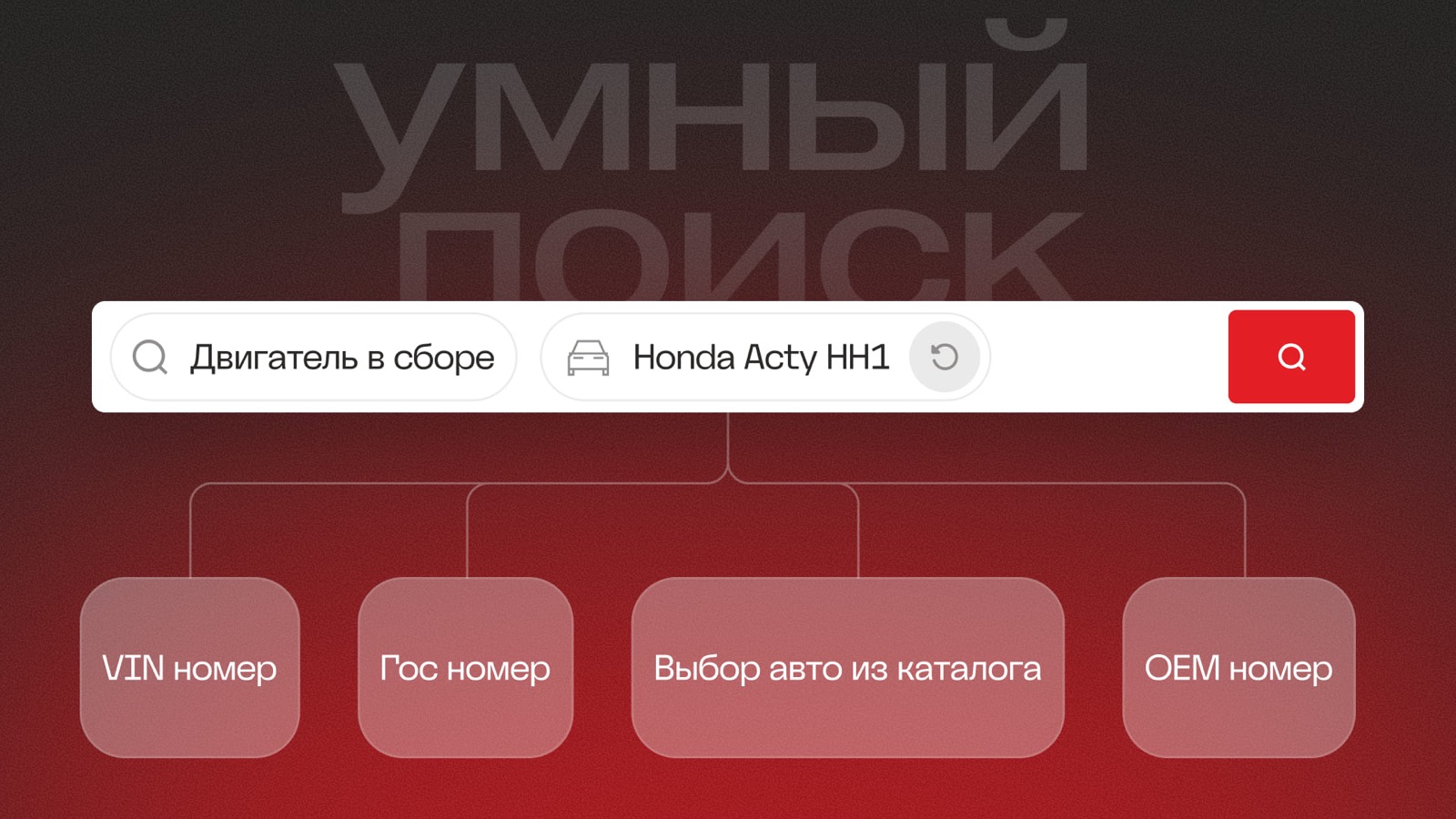
The main innovation of the project is a single search model that replaces separate mechanics:
On other platforms all these scenarios traditionally exist separately.
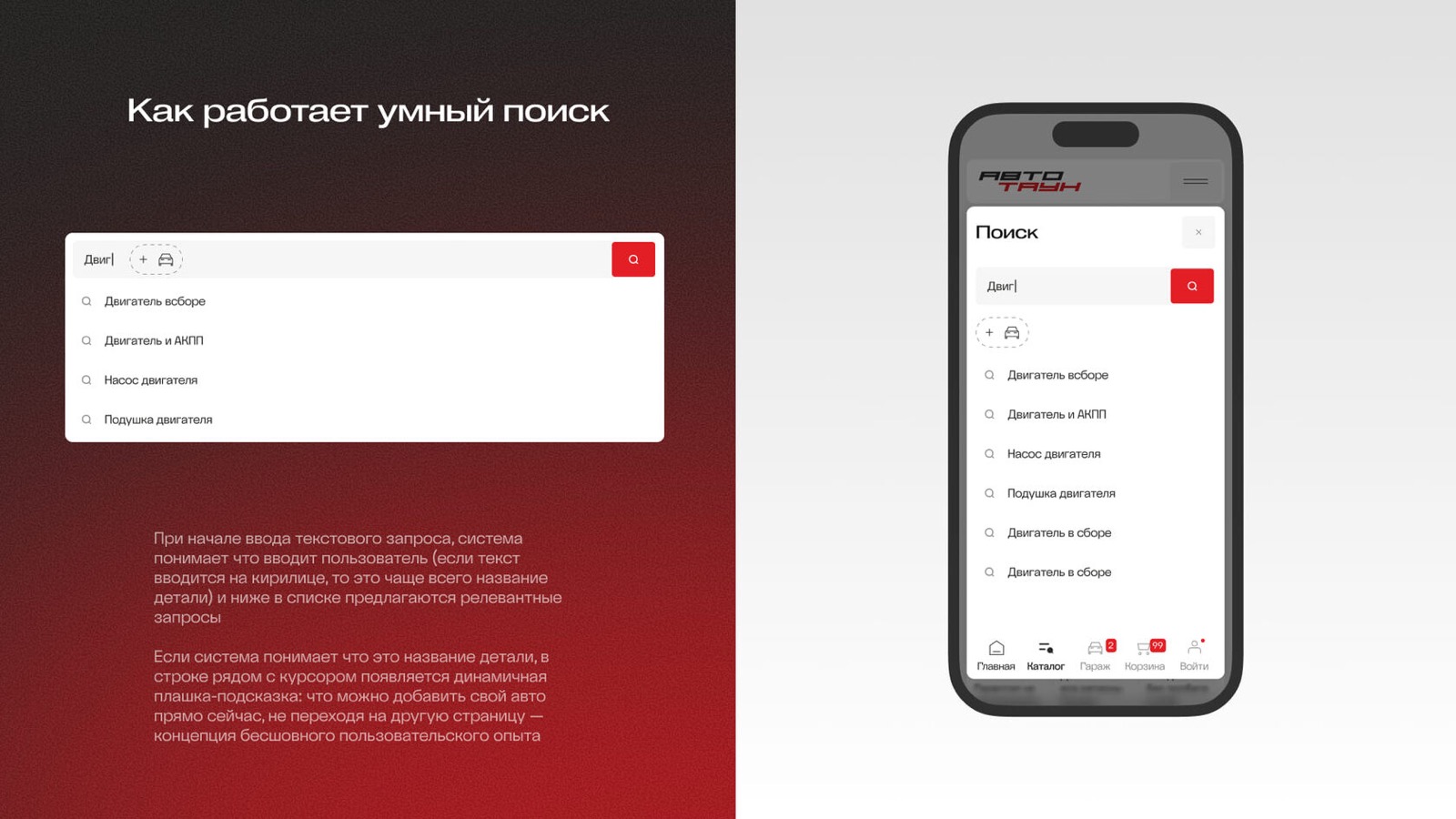
Tiqum combined them in one user window for the first time and created an algorithm that automatically determines the search method and offers an exact selection of parts.
The main innovation of the project is a single search model that replaces separate mechanics:
- search by VIN and frame number,
- search by license plate,
- the manual catalog,
- search by OEM number.
On other platforms all these scenarios traditionally exist separately.
Tiqum combined them in one user window for the first time and created an algorithm that automatically determines the search method and offers an exact selection of parts.
What it gave:
This is real technological know-how not found in other Russian parts selection services.
- Removes the need to “guess” where to click.
- Lets the user move quickly from the car to the parts.
- Makes search more accurate and reduces errors.
- Makes the service convenient for both beginners and professionals.
This is real technological know-how not found in other Russian parts selection services.
3. A carefully designed product card
The card of a part is one of the most complex pages in the industry.
It has to show:
The card of a part is one of the most complex pages in the industry.
It has to show:
- availability in four cities,
- real photos and the condition of the part,
- configurations and versions,
- compatibility with the car,
- specifications,
- prices and delivery times.
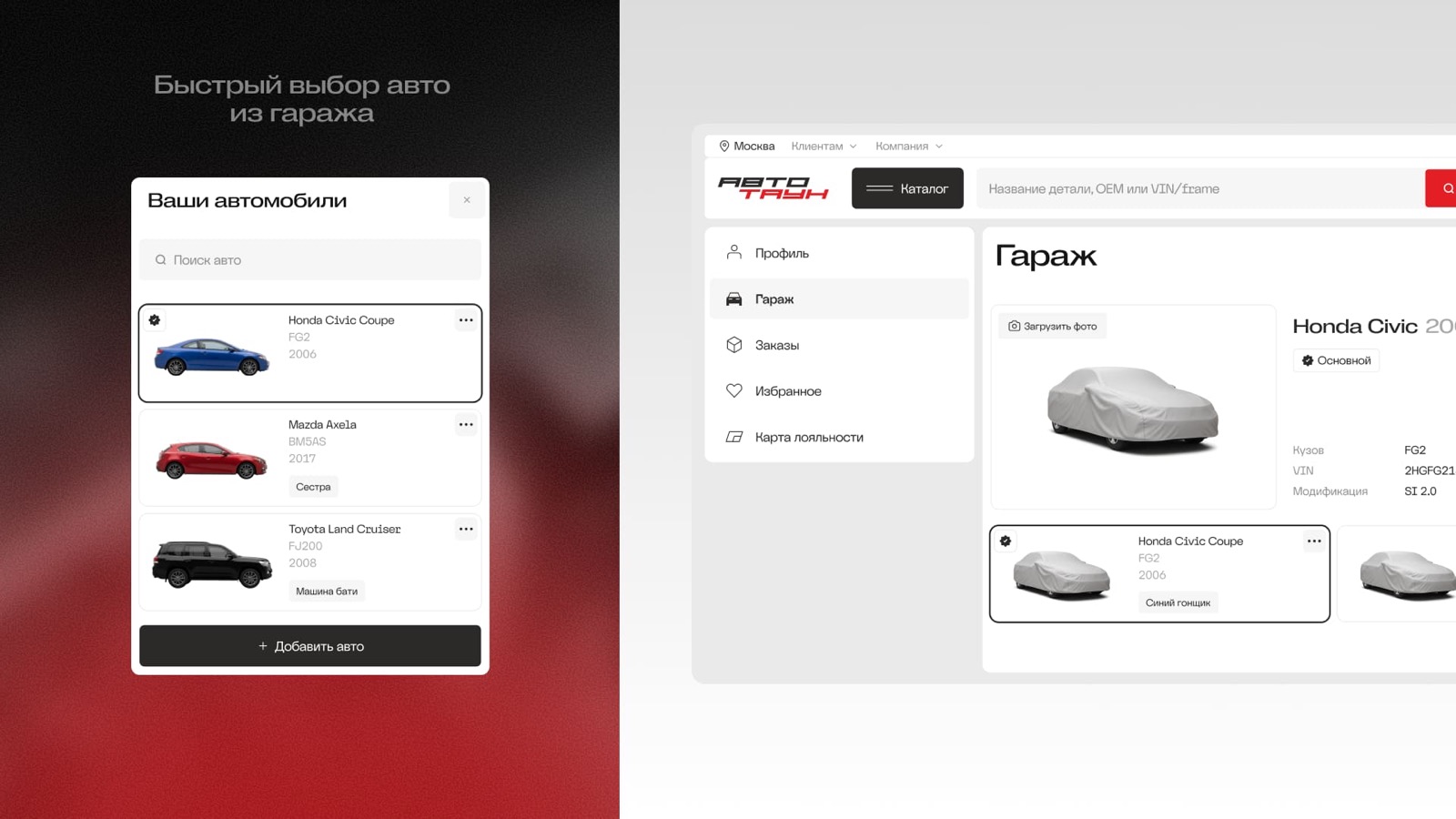
Instead of an overloaded page, Tiqum created a structured, light and airy card where the buyer understands at once whether the part fits.
Unique tools were added:
These tools radically increased users' trust, especially in the used parts segment, where the condition of the item is key.
Unique tools were added:
- A 360° view: a rotatable 3D model of the actual part.
- “Which car the part came from”: a card of the donor car with photos, mileage and a condition rating.
- The ability to add other parts from the same car to the cart.
These tools radically increased users' trust, especially in the used parts segment, where the condition of the item is key.
4. Brand style and a single design system
For Avtotaun, Tiqum created:
The brand began to look technological, modern and premium, which is extremely important in a market where most sites are outdated both visually and functionally.
5. Technical architecture and enterprise-level integrations
For the service to run fast with large volumes of data, Tiqum reworked the back-end architecture:
The platform withstands heavy loads and is ready to scale, which is critical for the future automotive ecosystem.
6. The process: agile sprints, tests and an R&D model
Tiqum worked as a joint product team:
In effect Tiqum became part of the client's R&D, which made it possible to build the product not “for the company” but together with the company.
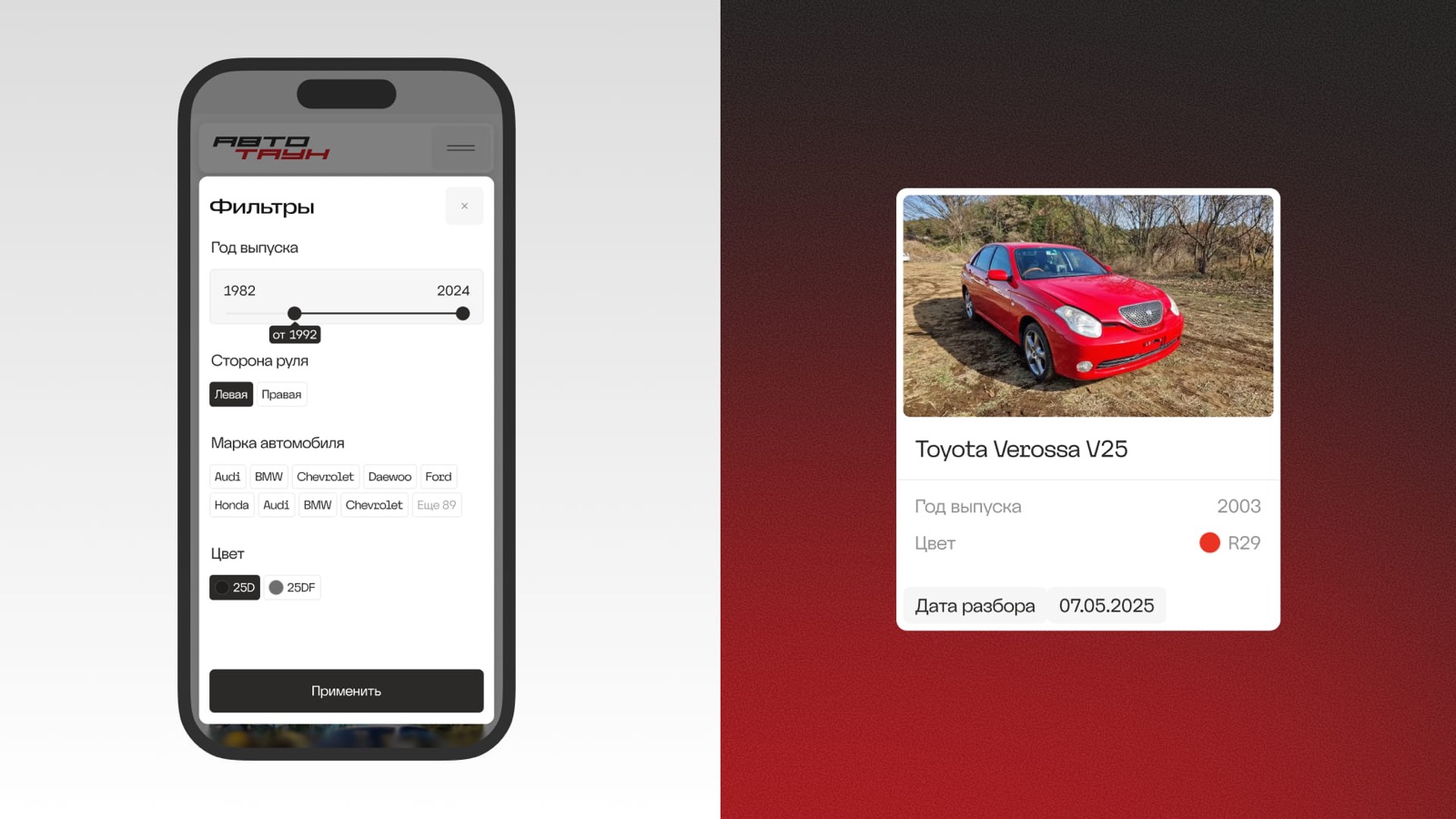
For Avtotaun, Tiqum created:
- a custom UI kit,
- a branded visual concept,
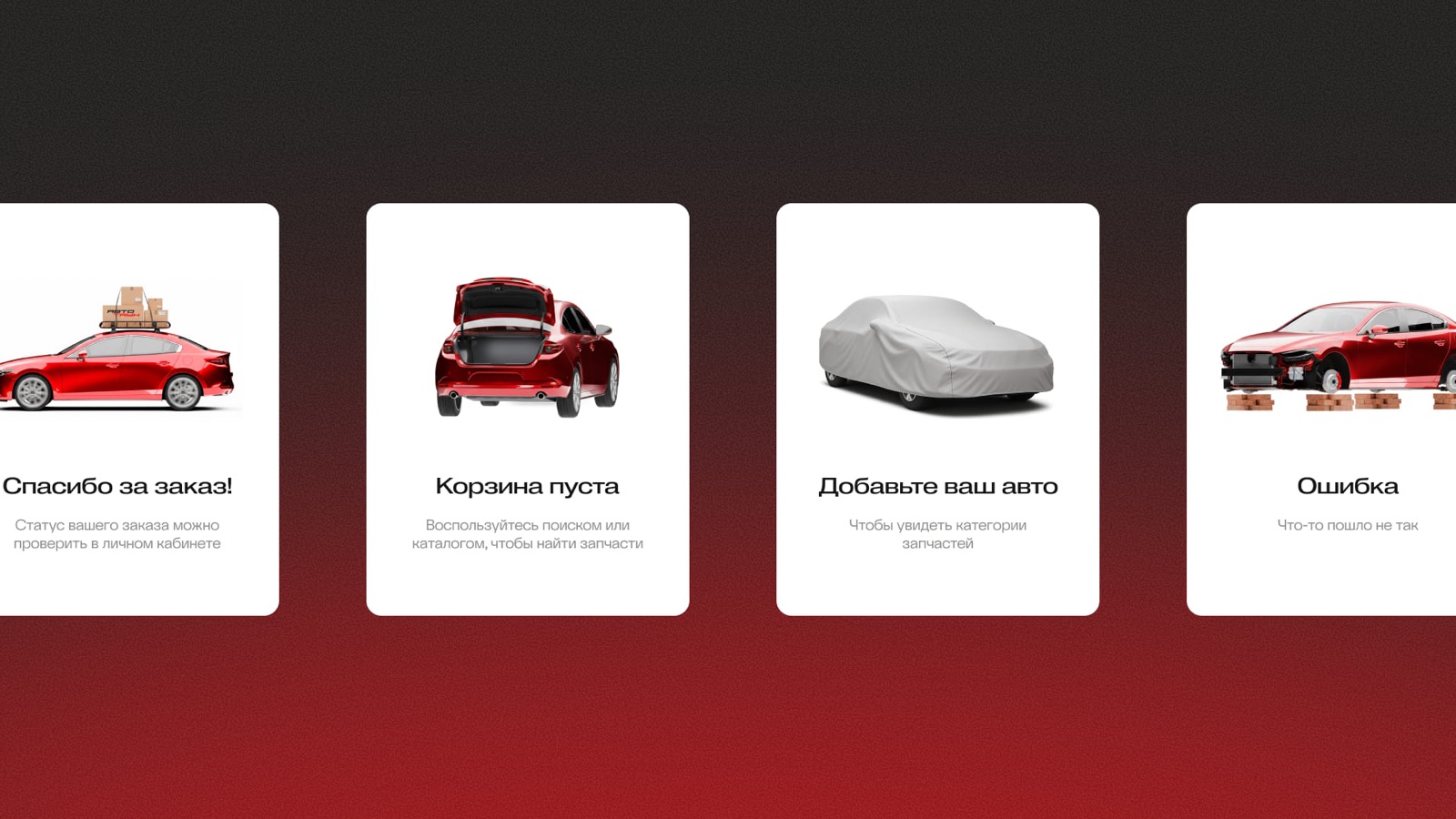
- 3D illustrations of cars for different interface states,
- a system of screen templates for more than 50 pages.
The brand began to look technological, modern and premium, which is extremely important in a market where most sites are outdated both visually and functionally.
5. Technical architecture and enterprise-level integrations
For the service to run fast with large volumes of data, Tiqum reworked the back-end architecture:
- real-time synchronization with the CRM and the accounting system,
- display of current stock and prices,
- optimized warehouse logic,
- handling of complex scenarios of stock mismatches and substitutes,
- a high level of fault tolerance.
The platform withstands heavy loads and is ready to scale, which is critical for the future automotive ecosystem.
6. The process: agile sprints, tests and an R&D model
Tiqum worked as a joint product team:
- ran UX research,
- tested prototypes on real buyers,
- collected hypotheses and checked them against data,
- ran sprints together with the Avtotaun team,
- integrated into warehouse processes, sales and CRM logic.
In effect Tiqum became part of the client's R&D, which made it possible to build the product not “for the company” but together with the company.