How we turned the 75-year history of USPTU into a digital museum for students
We helped the university create an interactive site that does not just tell about the past but engages and unites generations

We created a digital museum that raised student engagement and became a point of attraction for alumni.
The task:
To develop an anniversary site for the 75th anniversary of Ufa State Petroleum Technological University (USPTU) that would present the university's history in a modern digital format and attract students, alumni and teachers.
The reason:
The format of a museum exhibition could not keep up with the digital habits of its audience. The university wanted not just to tell about its past but to arouse interest in it.
An archival “excavation”: how the project began
When we were approached with the task of creating an anniversary site, it became clear that we had to do more than lay out a landing page: we had to build a real digital museum. We took on an ambitious task: to turn decades of the university's history into an engaging digital journey that would interest students, teachers, alumni and even the university's partners.
The project began with deep research. Together with the staff of the USPTU museum we systematized more than 1,000 artifacts: photos, documents, newspaper clippings, personal recollections. Many materials existed only on paper and required digital restoration. We restored photographs from the 1940s and 50s, clarified dates and matched events against real sources.
From a timeline to an emotional longread
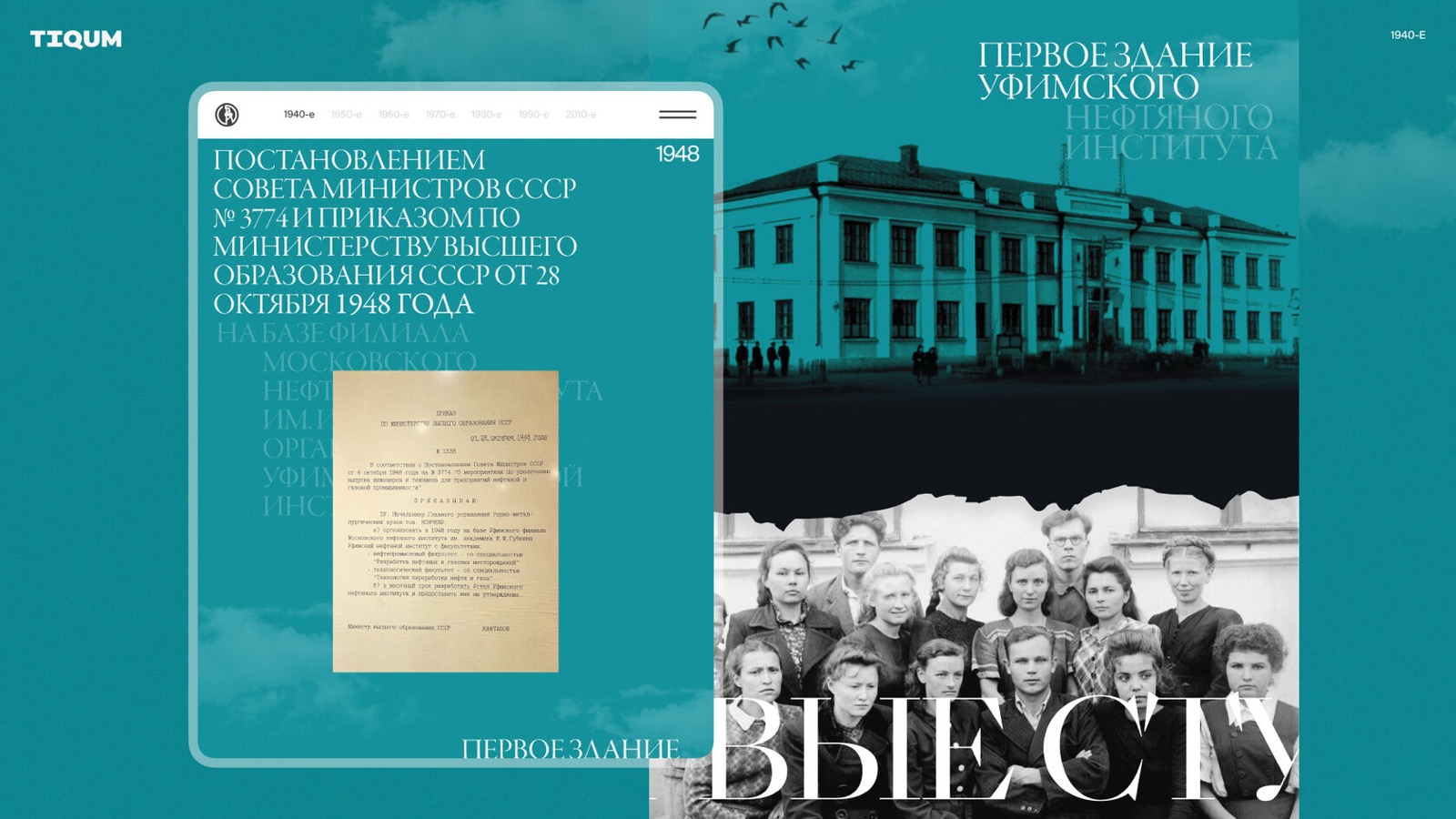
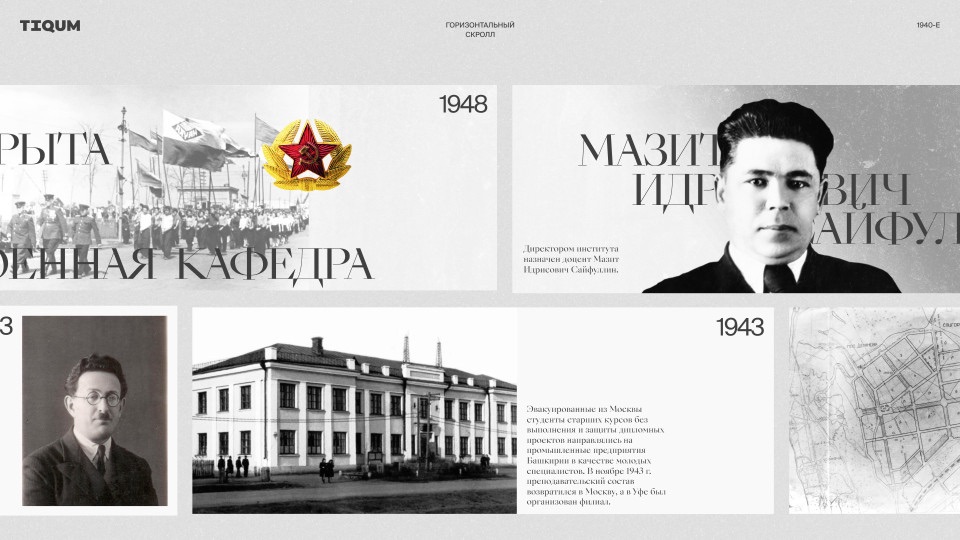
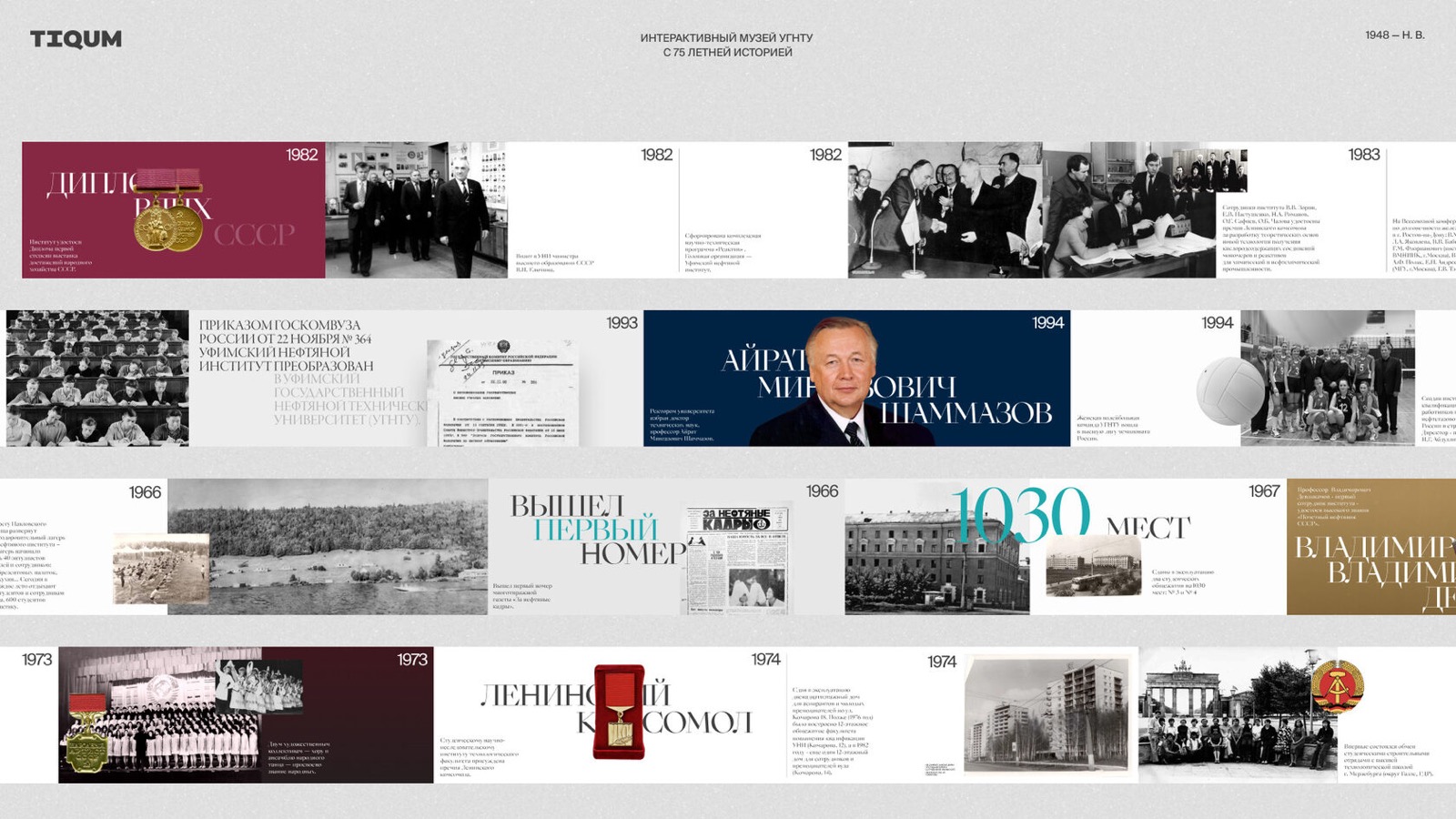
The next stage was designing the structure of the site. We decided to abandon a dry chronology in favor of a longread in which each block is devoted to a separate decade. This approach made the history dynamic: with a visual rhythm, the logic of transitions and dramaturgy.
We understood that a simple listing of facts would not hold attention. So the key element became a design combining rigor and relevance: typography, restrained color accents, built-in animations. The user seems to “leaf through” the eras, discovering rare images and micro-artifacts along the way. The transitions between blocks are accompanied by visual codes characteristic of each era.
Living history created together with users
To make the site truly interactive, we added functionality that lets visitors take part in filling it. Anyone, a student, an alumnus or a teacher, can leave a congratulation, tell a personal story or attach a photo. All the messages go into a separate block, “Memories and gratitude”, and become part of a shared digital chronicle.
This module became the most popular: in the first weeks after launch we received hundreds of sincere congratulations, archive photos and recollections that had not been published anywhere before. The site became a meeting point for generations and a platform for dialogue between the past and the future.
Technology and launch
The project was implemented on the Drupal CMS, a stable platform suited to large volumes of content and frequent updates. We used modern front-end development practices: responsive layout, parallax effects, animations, micro-interactions. All usage scenarios were tested, from quick visits to deep navigation through the archives.
The average session length exceeded 4 minutes, an excellent engagement figure. The bounce rate turned out minimal and the share of repeat visits high.
Results and recognition
The project was completed in 3 months, from the initial analytics to launch. We worked as one team with the university, synchronizing decisions with the museum department and the IT service. A month before release we ran closed testing with focus groups, which let us refine the user scenarios and the interface. We also prepared training materials for the administrators.
In the end the university received not just a site but a digital cultural artifact. It became an important part of the image strategy, is used at external events and presentations, and is an accessible entry point into the history of USPTU. The project was awarded Bronze at the Tagline Awards 2023 in the “Best Design” category.
Results:
- The site was visited by more than 20,000 people in the first quarter after launch.
- More than 1,000 congratulations and alumni stories were added.
- The average time on site was over 4 minutes, with a viewing depth of 5+ screens.
- It is used in the university's presentations at international forums.
- The project received Bronze at the Tagline Awards 2023.
- USPTU got a lasting digital tool for working with its history and image.