The website will remain a key element of a brand in 2030
Despite the rise of messengers and social networks, corporate websites keep their value as a tool of trust, reputation and company identity

While business moves more and more into messengers and social networks, experts at Tiqum believe that by 2030 the corporate website will keep its importance. It will remain the most important element of a brand's digital identity and a key tool of reputational positioning.
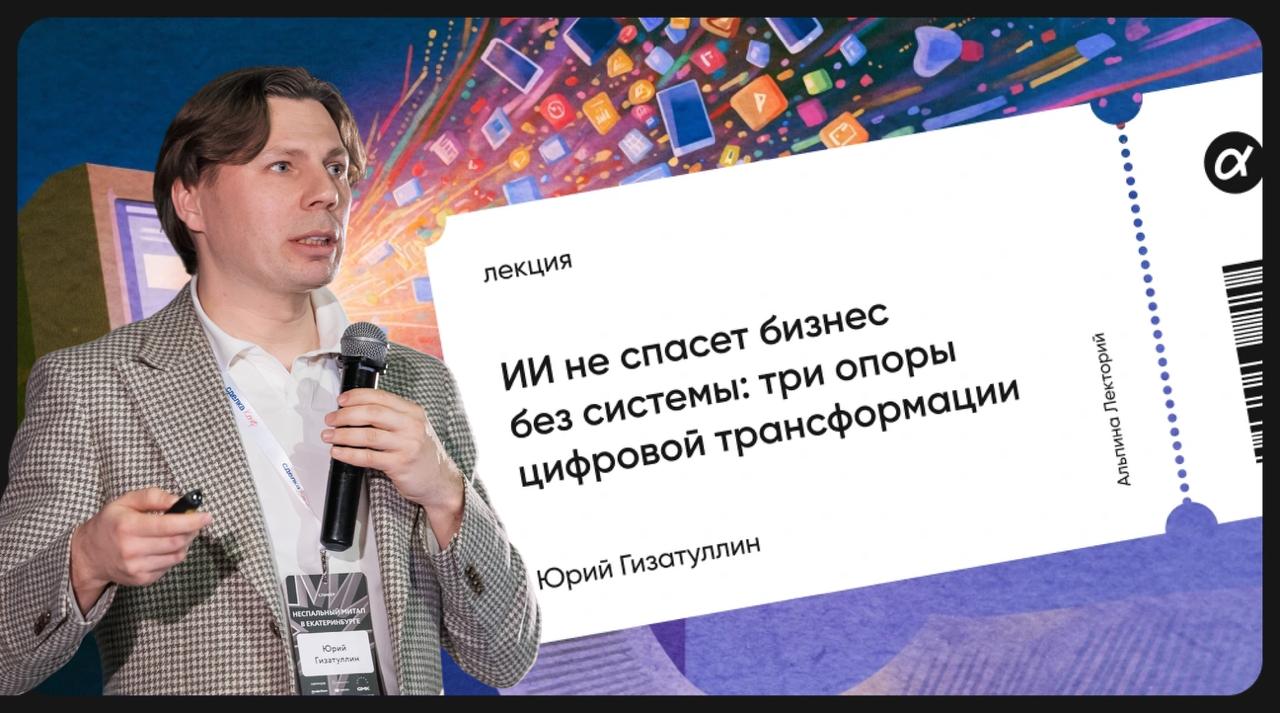
Tiqum founder Yuri Gizatullin notes:
“Ten years ago a website was a sales channel. Today it is an indicator of a company's maturity, the equivalent of a modern office or a business card. It builds trust and creates a sense of stability.”
From brochure sites to digital ecosystems
Over the past two decades the functions of a website have changed significantly. Where it used to play the role of an “information storefront”, today it is becoming a center of communication and part of a single ecosystem that combines CRM, analytics, social networks and sales platforms.
The trend is confirmed by Gartner research: by 2030 more than 80% of medium and large companies will use websites as “central nodes” of their digital infrastructure rather than just pages describing services.
“Users today have grown up: they read the visual and semantic level of a company instantly. From the website they understand who they are dealing with: a local contractor or a technology brand,” Yuri Gizatullin explains.
Social networks will not replace corporate websites
According to Tiqum, about 60% of small and medium-sized companies in Russia today bet on Telegram, Instagram* and TikTok as their main communication channels (* Instagram is owned by Meta, which is designated as an extremist organization and banned in Russia). But in doing so they lose control over their content and analytics.
“When a company moves its presence entirely to social networks, it becomes dependent on algorithms. Today you are in the feed, tomorrow you are not. A website remains your digital asset, which you control yourself,” the expert adds.
Why business will still need a website in 2030
A website solves several problems at once:
A website is especially important for companies working in B2B, real estate development, education and consulting, where trust in the brand plays a decisive role in choosing a partner.
A new aesthetic of corporate presence
According to Tiqum's observations, in recent years the notion of a “digital image” has appeared. It is not only the design and content of a site but also how it interacts with the user: loading speed, responsiveness, feedback scenarios.
“In 2030 a website will be not just a page but a company's digital office. A customer will be able to place an order at once, chat with a consultant, get analytics or technical support in one window. It is a logical development of the user experience,” Yuri Gizatullin is sure.
Tiqum founder Yuri Gizatullin notes:
“Ten years ago a website was a sales channel. Today it is an indicator of a company's maturity, the equivalent of a modern office or a business card. It builds trust and creates a sense of stability.”
From brochure sites to digital ecosystems
Over the past two decades the functions of a website have changed significantly. Where it used to play the role of an “information storefront”, today it is becoming a center of communication and part of a single ecosystem that combines CRM, analytics, social networks and sales platforms.
The trend is confirmed by Gartner research: by 2030 more than 80% of medium and large companies will use websites as “central nodes” of their digital infrastructure rather than just pages describing services.
“Users today have grown up: they read the visual and semantic level of a company instantly. From the website they understand who they are dealing with: a local contractor or a technology brand,” Yuri Gizatullin explains.
Social networks will not replace corporate websites
According to Tiqum, about 60% of small and medium-sized companies in Russia today bet on Telegram, Instagram* and TikTok as their main communication channels (* Instagram is owned by Meta, which is designated as an extremist organization and banned in Russia). But in doing so they lose control over their content and analytics.
“When a company moves its presence entirely to social networks, it becomes dependent on algorithms. Today you are in the feed, tomorrow you are not. A website remains your digital asset, which you control yourself,” the expert adds.
Why business will still need a website in 2030
A website solves several problems at once:
- Reputation. It confirms the company's status and strengthens the trust of partners and customers.
- Conversion. It serves as a base for marketing funnels and SEO promotion.
- Security. The content belongs to the company and does not depend on third-party platforms.
- Data management. Its own analytics, CRM and integrations give the business an accurate picture of audience behavior.
A website is especially important for companies working in B2B, real estate development, education and consulting, where trust in the brand plays a decisive role in choosing a partner.
A new aesthetic of corporate presence
According to Tiqum's observations, in recent years the notion of a “digital image” has appeared. It is not only the design and content of a site but also how it interacts with the user: loading speed, responsiveness, feedback scenarios.
“In 2030 a website will be not just a page but a company's digital office. A customer will be able to place an order at once, chat with a consultant, get analytics or technical support in one window. It is a logical development of the user experience,” Yuri Gizatullin is sure.