Yuri Gizatullin gave a lecture on digital transformation for small and medium-sized business
The founder of Tiqum spoke to the Ural Business Cluster about digitalization trends, a new culture of teams and data on the Russian market

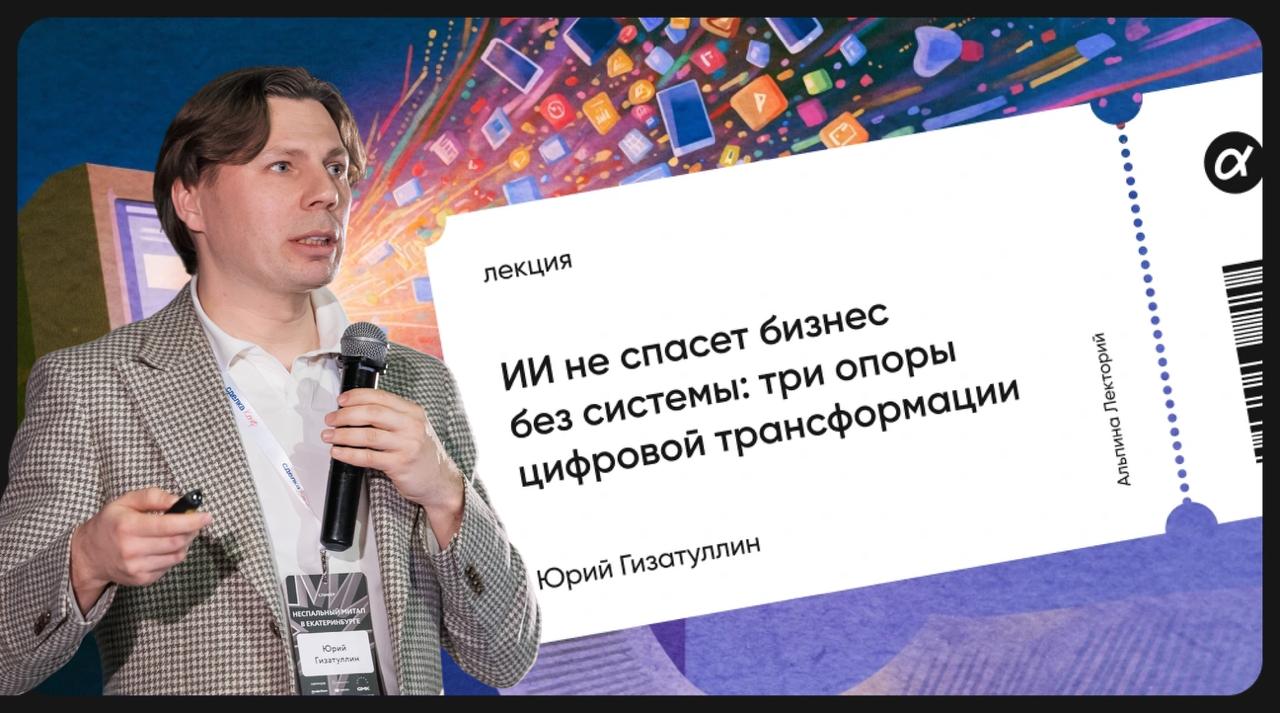
Yuri Gizatullin, founder of the IT company Tiqum, gave a lecture on digital transformation to entrepreneurs of the Ural Business Cluster. The meeting was held online and brought together representatives of small and medium-sized business from different regions. According to participants, the Zoom format made it possible to attract more listeners and organize an active discussion: the audience asked questions, shared cases and argued about practical tools of digitalization.
The lecture examined in detail the key global and Russian trends in digital transformation.
As Yuri Gizatullin noted, the speed of change in technology is growing exponentially: according to IDC, the volume of the world's data doubles every two years, and the daily volume of information created reaches 330 million terabytes. This creates new conditions for business, where data becomes a key competitive advantage: that is what 90% of company executives believe, according to Accenture research.
Yuri paid special attention to the “uberization” of business, a model in which a company uses its expertise to create a digital platform connecting providers and customers. He showed entrepreneurs visual examples from his presentation: a comparison of the traditional and ecosystem business models, the growth of digital services and the demand for platforms among the Russian population: 63% of citizens shop on marketplaces every week, 48% visit video hosting sites every day and 42% use ride-hailing platforms.
The meeting also examined in detail the effect of digital culture on company performance.
“Even the most modern technology does not work without the right team culture. The bottleneck of digitalization is always people,” Yuri noted, showing slides on standardizing processes and the new role of teams in ecosystem models.
Fresh statistical data was presented to the entrepreneurs as well:
– 63% of Russians buy on marketplaces at least once a week;
– 52% of small and medium-sized businesses already sell online;
– companies with a digital strategy show productivity growth of up to 30%.
Yuri also showed several of his own projects and spoke of the new opportunities opening up thanks to the introduction of AI and digital platforms. According to the presentation, by 2030 the platform economy will become the dominant business model; worldwide its share already reaches 10% of global GDP, and in Russia 6%.
“I update every talk, because the market is changing incredibly fast. Today digitalization is not a choice but a necessity for any business,” Yuri Gizatullin stressed.
Tiqum noted that the company will continue its educational program and plans to hold regular lectures for entrepreneur communities on digital culture and the transformation of processes.