Yuri Gizatullin: Singapore is the best startup in history
The IT entrepreneur on why Singapore can be seen as a product, what the numbers say about the country's economy and what business can learn from it.

— You travel a lot and study different economies. Why did Singapore in particular make such an impression on you?
When I was in Singapore, a simple thought occurred to me: this is a product, and one of the best I have seen. Not an abstract metaphor but literally: a managed system designed for a specific result. In 60 years the country has gone from a fishing village to one of the world's top 10 economies. Singapore is smaller in area than Moscow, yet it ranks fourth in the world for the development of its startup ecosystem, behind only the US, the UK and Israel.
— Where did that impression begin: with the urban environment, the infrastructure?
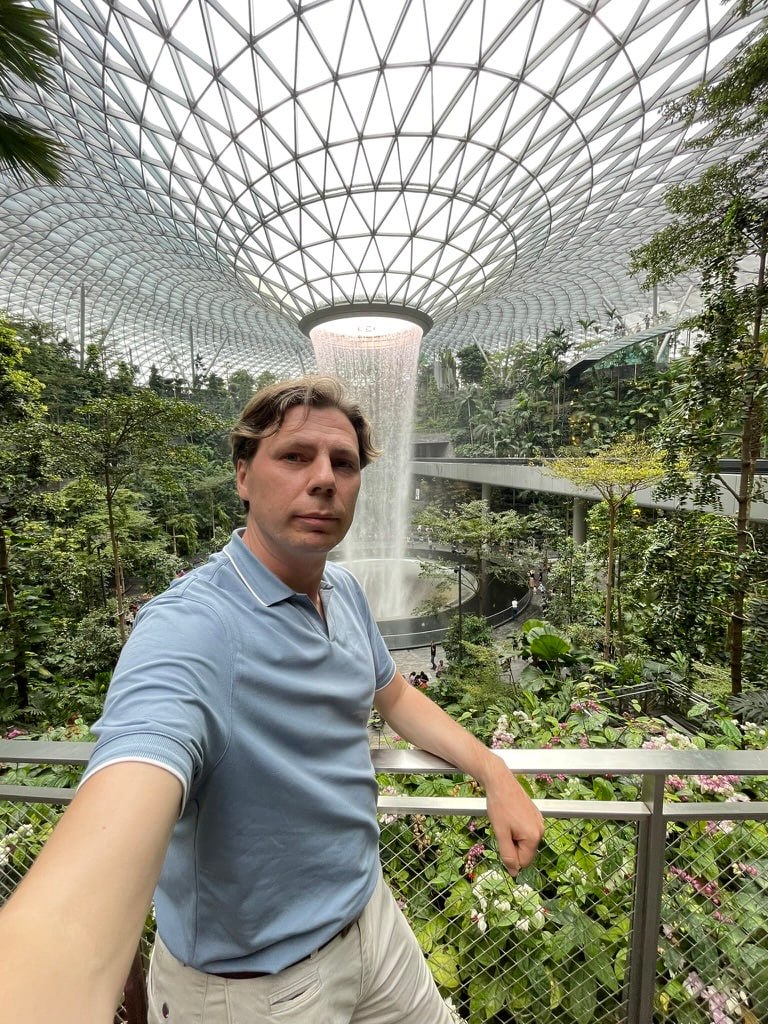
Yes, and Changi Airport is especially telling for me. In 2026 it was named the world's best airport by Skytrax for the 14th time, scoring a record 4.87 out of 5, the highest overall score in the history of the award. When you see infrastructure where almost every parameter, from navigation to hygiene, has been pushed to the limit, you start to look differently at what you build yourself, including in business.
— You singled out several figures that, in your words, “turn your idea of what is possible upside down”. Which are the most telling?
I will start with startup density: Singapore has one startup for roughly every 1,300 people. That is denser than the US and almost on a par with Israel. For comparison, in Russia the figure is one startup per 33,000 people. An order of magnitude apart.
The second indicator is safety. Singapore's crime index on the Numbeo scale is 22.5 points, while Moscow's is about 48. It is one of the lowest figures in Asia.
The third block is the economy and taxes. The corporate income tax rate is 17%, and the tax on dividends and capital gains is 0%. GDP per capita in Singapore is about 107 thousand dollars, against roughly 13 thousand dollars in Russia.
— And what about the cost of living and housing? Singapore is considered one of the most expensive cities in the world.
That is true, and there is an interesting paradox here. A square meter of housing in Singapore costs on average 10 times more than in Moscow. Yet 80% of Singaporeans live in public apartments under the HDB program and wait about five years on average for their turn. In other words, the high market price is offset by a large-scale system of public housing, which is also part of the “product” architecture.
— You also mentioned social indicators, such as life expectancy.
Yes, life expectancy in Singapore is 83.9 years, one of the highest in the world. And here again you can see the logic of a systematic approach: the quality of healthcare, the urban environment and everyday discipline all work toward a common result.
— You also recalled the story of chewing gum. Why is that example important to you?
Because it shows the essence of the model. Chewing gum was banned in Singapore back in 1992, at first glance a trifle. But the result is perfectly clean pavement and an urban environment without the litter on the sidewalks that many big cities are used to. For me it is a metaphor for a broader principle: tough decisions sometimes give a better interface for living, even if at the moment they look like a restriction of freedom.
— Does that mean you consider an approach that is authoritarian in form an effective management tool?
I look at it not from a political but from a product point of view. Singapore has proved that with consistent execution even unpopular decisions can build a system that works better than most alternatives in terms of safety, infrastructure, attracting capital and quality of life overall. The country's startup ecosystem is valued today at 375 billion dollars, and that is the result of decades of deliberately designing the conditions, not an accident.
— And finally, the question you put to your readers yourself: would you want to live in a country like that?
I would put it this way: the question is not whether you are ready to live in Singapore but whether you are ready to apply its way of thinking to your own product, company or city. That is what struck me most of all.